

Falling is a common cause of knee injuries, whether it’s a minor stumble, a slip on a wet surface, or a more severe fall from a height. The knees bear a significant amount of impact during these falls, which makes them especially vulnerable to various types of injuries. Understanding the common knee injuries from falling can help you recognize the symptoms, seek treatment swiftly, and prevent long-term damage. Check out these 7 common knee injuries from falling and learn more about how our team of Conyers doctors can help.
What Happens to Your Knee During a Fall?
When you experience a fall on your knee, the joint absorbs a tremendous amount of force. Whether you slipped on a wet floor, tripped on uneven pavement, or fell on a knee cap on concrete, the kneecap and surrounding ligaments take the brunt of the impact.
Many patients say, “I fell on my knee, and it hurts,” assuming the pain is just bruising. However, knee trauma and fall injuries can affect cartilage, ligaments, tendons, and even the bone beneath the kneecap. The position of your leg at the moment of impact also matters. If you were twisting while falling to your knees, the force may strain ligaments in addition to causing surface bruising.
The immediate pain may feel sharp or throbbing, but symptoms often evolve over several hours. Knee swelling after fall injuries is common and can indicate inflammation, fluid buildup, or internal bleeding inside the joint.
Understanding what structures may be involved can help you take your injury seriously and seek evaluation before complications develop.
Patellar Fracture
A patellar fracture occurs when the kneecap (patella) breaks, which most commonly occurs from a direct impact on the knee during a fall. This type of knee injury from falling is particularly painful and can make it difficult or impossible to straighten the knee or walk.
- Symptoms: Intense pain, swelling, bruising, and difficulty moving the knee
Patellar Tendonitis
Patellar tendonitis, also known as “jumper’s knee,” can occur from a fall that puts excessive strain on the patellar tendon, which connects the kneecap to the shinbone. This injury is more common in athletes, but it can also happen during a slip and fall.
- Symptoms: Pain just below the kneecap, swelling, and tenderness in the affected area
Meniscus Tear
The meniscus is a piece of cartilage shaped like a C that acts as a cushion between the thighbone (femur) and the shinbone (tibia). A sudden twist or direct impact from a fall can cause a meniscus tear, causing pain and limited mobility.
- Symptoms: Pain, swelling, stiffness, and a feeling of the knee “locking” or “catching” when bearing weight
Anterior Cruciate Ligament (ACL) Injury
The ACL is one of the key ligaments that stabilize the knee joint. A sudden change in direction, landing awkwardly, or a direct blow to the knee during a fall can result in an ACL injury. ACL injuries can range from a mild sprain to a complete tear.
- Symptoms: A “popping” sound at the time of injury, severe pain, swelling, and instability in the knee
Ligament Sprain
In addition to the ACL, the knee contains several other ligaments, including the medial collateral ligament (MCL) and the lateral collateral ligament (LCL), which can also become sprained during a fall. A ligament sprain occurs when these ligaments are stretched or torn, leading to pain and instability.
- Symptoms: Pain, swelling, bruising, and difficulty bearing weight on the affected knee
Knee Bursitis
The bursae are small fluid-filled sacs that cushion the bones, tendons, and muscles that support the knee joint. A hard fall can cause the bursae to become inflamed, leading to a condition known as knee bursitis.
- Symptoms: Swelling, tenderness, and warmth around the knee, especially in front of the kneecap
Osteochondral Injury
An osteochondral injury involves damage to both the cartilage and the underlying bone in the knee joint, often resulting from a high-impact fall. This type of injury can lead to long-term joint problems if not properly treated.
- Symptoms: Pain, swelling, stiffness, and a limited range of motion in the knee
Symptoms of Knee Injury After a Fall
Recognizing the symptoms of knee injury after fall events is critical for early treatment. While some injuries cause immediate pain, others develop gradually.
Common warning signs include:
- Persistent knee pain after a fall that worsens with weight bearing
- Visible bruising or redness
- Limited range of motion
- Instability when standing or walking
- Locking or catching sensations
- Significant knee swelling after a fall that does not improve within 24–48 hours
If you fell and injured knee structures, you may also notice difficulty bending or straightening your leg. In more severe cases, you may hear or feel a pop at the time of impact.
People who fall on a knee often assume the discomfort is temporary. However, untreated knee damage from fall injuries can lead to long-term instability or cartilage deterioration if not addressed properly.
Treatment & Recovery for Knee Injuries
Recovering from a knee injury fall will require a comprehensive treatment plan that addresses not only the knee injury itself but also any underlying factors that may contribute to your overall knee and joint health. At AICA Orthopedics, our multi-specialty team of slip and fall doctors can provide a holistic approach to your recovery, from chiropractic care to consultation with an orthopedic surgeon.
Chiropractic Care
A chiropractor can provide you with a non-invasive and drug-free approach to treating knee injuries by addressing any misalignments that may have resulted from the fall. Through manual adjustments, a chiropractor can help reduce your pain, improve joint mobility, and promote the body’s natural healing processes. Chiropractic care can be particularly beneficial for addressing issues like ligament sprains and knee bursitis by focusing on restoring proper alignment and healthy functioning to the affected area.
Physical Therapy
Physical therapy is a common aspect of recovering from a knee injury, particularly after a slip and fall injury. A physical therapist will work with you to develop a personalized exercise program that helps strengthen the muscles around your knee, improve your flexibility, and restore your range of motion. Physical therapy can also help reduce pain and swelling, prevent further injury, and help speed up your return to your regular activities.
When a Fall to the Knees Requires Immediate Care
Not every fall to the knees results in a serious injury, but some situations require urgent evaluation.
You should seek immediate medical attention if:
- You cannot bear weight at all
- The knee appears visibly deformed
- Swelling is severe and rapid
- You experience numbness below the knee
- You heard a loud popping sound during the fall on knee
High-impact accidents, especially if you fell on the kneecap on concrete, can cause fractures that are not always obvious without imaging. Similarly, ligament tears may not present fully until swelling increases.
If you were falling to your knees from a height or during a car accident, the force involved may increase the likelihood of structural damage. Early imaging and evaluation can help prevent worsening instability or chronic knee weakness.
Orthopedic Doctors
An orthopedic doctor specializes in diagnosing and treating musculoskeletal injuries, including knee injuries from falls. If you are dealing with a serious knee injury, like a patellar fracture, ACL tear, or osteochondral injury, an orthopedic doctor can evaluate the extent of the damage and recommend the most appropriate treatment options, which may include surgical interventions if necessary.
How to Treat a Knee Injury from Falling
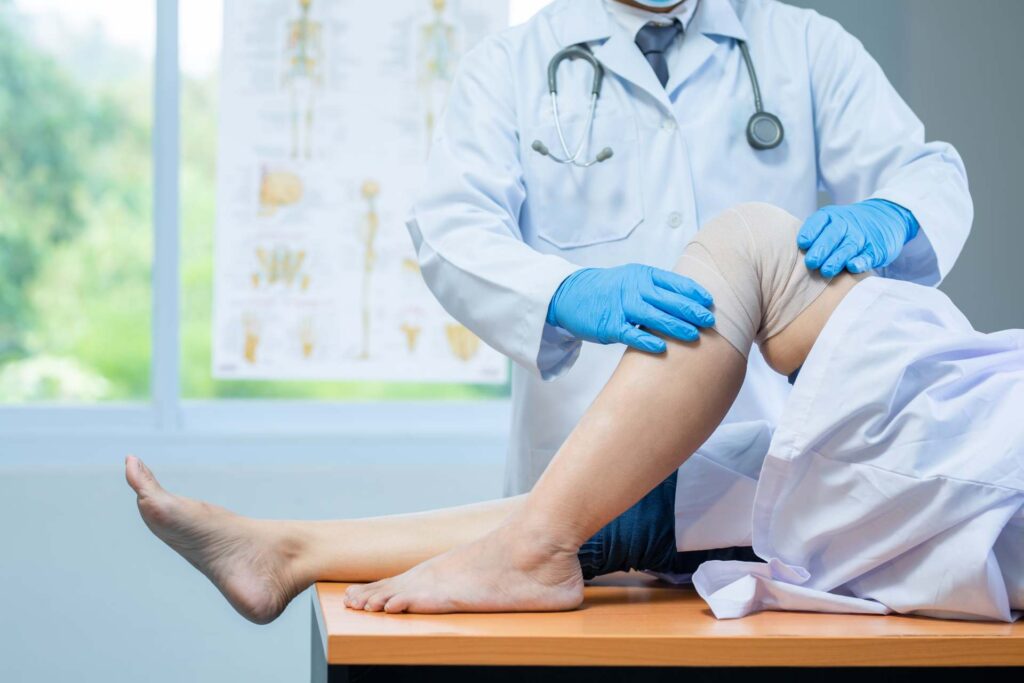
Treating a knee injury from falling typically involves a combination of rest, rehabilitation, and a treatment plan tailored to your specific circumstances. Early diagnosis and treatment are key to preventing complications so that you’re on track to experience the best possible outcome.
Here’s what to know about how you can take care of yourself after a knee injury from falling:
Rest and Protection: Avoid putting weight on the injured knee and use crutches or a brace if necessary to better protect the joint.
- Ice and Compression: Apply ice to the injured area to reduce swelling and inflammation. Use a compression bandage to provide additional joint support and minimize swelling in the area.
- Elevation: Elevate the injured knee above heart level to help reduce swelling.
- Medication: Over-the-counter pain relievers, such as ibuprofen or acetaminophen, can help manage pain and reduce inflammation.
- Medical Evaluation: Consult with a slip and fall doctor as soon as possible so they can determine the severity of your injury and recommend the most appropriate treatment options for you.
What to Expect During Recovery
Recovery from a knee injury from a fall varies depending on severity. Mild bruising or sprains may resolve in several weeks with proper care. More significant injuries, such as ligament tears or cartilage damage, may require months of structured rehabilitation.
Patients who report “I fell on my knee and it hurts” often feel discouraged if pain lingers longer than expected. However, structured treatment plans that include strengthening, mobility exercises, and joint stabilization can significantly improve outcomes.
Managing knee swelling after a fall early is particularly important. Persistent swelling can restrict joint motion and slow healing. Working with a multidisciplinary team ensures that both inflammation and structural damage are addressed simultaneously.
Staying consistent with therapy and following medical guidance helps reduce the likelihood of chronic knee pain after fall episodes in the future.
Long-Term Risks of Untreated Knee Injuries from Falling
Ignoring knee injuries from falling can lead to ongoing complications. When cartilage or ligaments are damaged and not properly rehabilitated, the knee joint may begin compensating in unhealthy ways.
Over time, untreated knee injury from fall incidents can contribute to:
- Chronic instability
- Early joint degeneration
- Persistent inflammation
- Altered walking patterns
- Increased risk of future falls
Even a seemingly minor incident where you fell on your knee can create subtle misalignment that affects hip and ankle mechanics. Left uncorrected, this imbalance may cause additional joint stress.
Addressing knee trauma and fall injuries early supports proper healing and protects long-term joint health.
Slip & Fall Knee Injury Doctors in Conyers
Knee injuries from falls are common in public settings, the work place, and at home. They can range from mild sprains to more severe conditions that end up needing surgical intervention.
Recognizing the symptoms and getting treatment as soon as possible can make a huge difference in your recovery and long-term knee health. At AICA Orthopedics in Conyers, our multi-specialty team of Conyers doctors includes chiropractors, physical therapists, and orthopedic surgeons who work together to provide a comprehensive approach to your recovery. If you recently fell and injured your knee structures, do not assume the discomfort will resolve without evaluation. Persistent swelling, instability, or worsening pain may indicate deeper knee damage from fall trauma. Early diagnosis allows our team to identify whether you are dealing with soft tissue strain, ligament injury, or more complex joint involvement so that treatment can begin promptly.
If you’ve experienced a falling-on-knee injury, contact AICA Orthopedics today and get started on a personalized treatment plan to help you recover.